For serious classical guitarists, at any age and any stage, ready to commit to twelve months of real change

The Transformation Year

One-to-one coaching that finally makes the guitar sing.

Rebuild your hands, your confidence, and your musical voice. Not through more practice or harder pieces, but through tailored coaching built around where you are right now.

New Cohort Opens Soon
Join the Waitlist:
Join the Waitlist

I'll let you know when we're ready for you.

Allen Mathews, founder of Classical Guitar Shed

The plateau

Most players reach a wall they can't quite name

There is a point most players arrive at where progress starts to feel like maintenance.

The practice is still happening, the scales, arpeggios and the pieces built up over months, are all still there…

But the progress doesn't match the effort going into it.

While the pieces that should feel settled still tighten under the hands, and the tone you first heard in your head, the one that started it all, still doesn't quite arrive.

And a question starts following you into the practice room. Am I doing this correctly, or am I building habits I will have to unlearn later?

Some players meet this wall after years of steady work.

Others meet it between long stretches away from the instrument, when playing has been on and off for years and each return is spent climbing back to where you were.

However it happens, there are two roads from this exact spot.

On one, you keep going the way you have been, and for some players that is the right road.

On the other, someone is finally watching, and the ceiling lifts.

And that second road is exactly where this program begins. And it begins by meeting you where you already are, not by asking you to be further along than you are.

“For the first time, I feel like I actually know what I'm doing when I practice, and getting better because of it.”

Robert Balmer

“...showed me things to change that have made a huge improvement in my technique and have made a pain in my left wrist I've had since January disappear.”

Wendy Morgan

“I tried to push it and do too much too fast. That just led to unsatisfying playing, physical discomfort and injury... Now I organize my playing around focus, clarity, detail and correct reps. I have stopped trying to achieve better playing and my playing is better. I have never enjoyed playing so much.”

Brian Yates
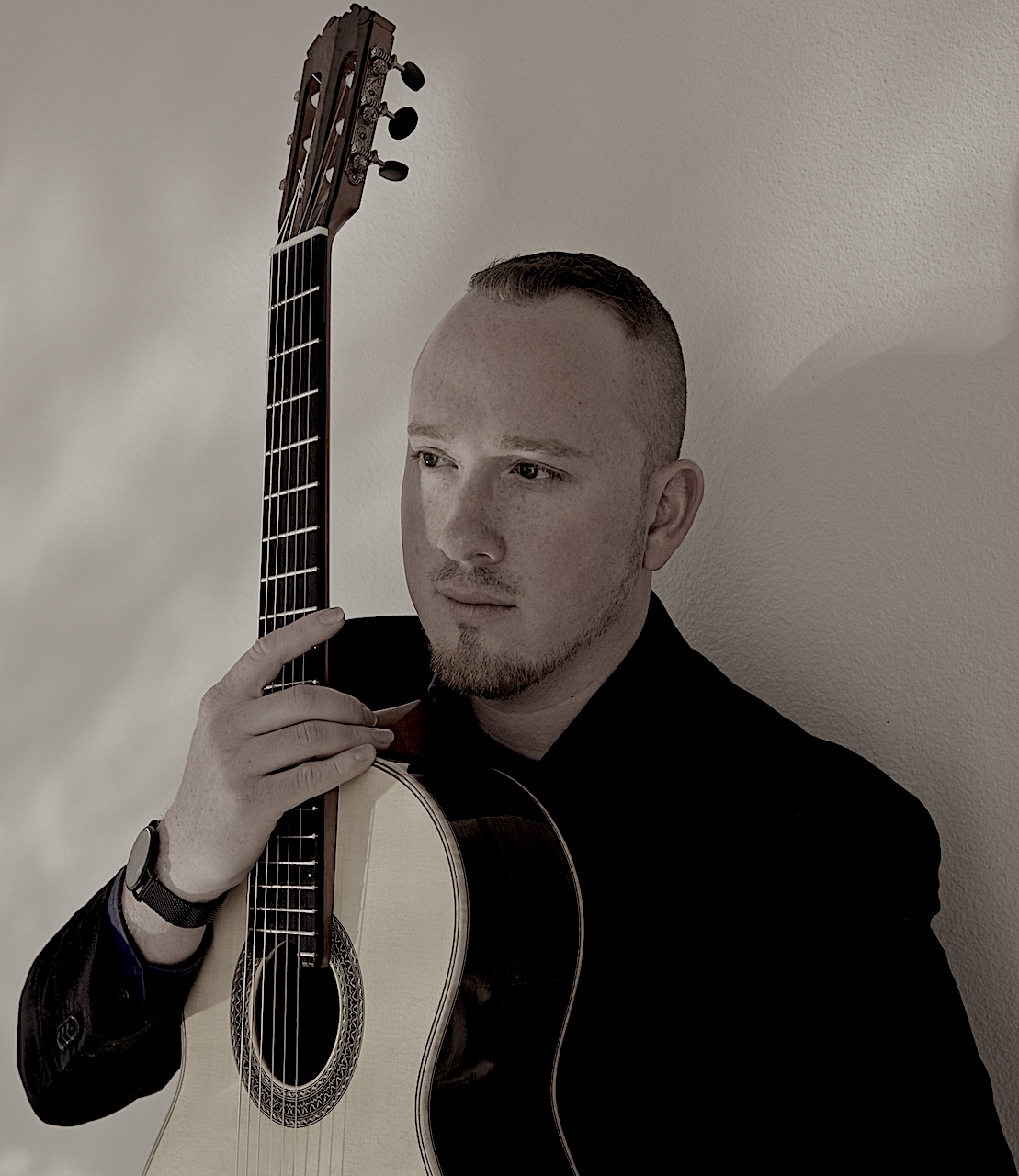
Allen Mathews with his classical guitar

Why this had to exist

Why the Transformation Year had to happen

In 2015 I was teaching out of my studio in Portland and building The Woodshed at the same time. And I had a niggle I could not shake. I was under-serving my students.

The ones working through the material alone made progress, but more slowly. The same students, when I watched their hands every week, moved faster. I caught the small things early, before they hardened into habits. Left alone, those habits take hold, and then take years to undo.

I knew exactly why it mattered, because I had lived both sides of it…

For about twenty years I had a teacher or coach of my own, someone I saw every week or two. What they gave me was rarely technical. They caught things early, and they told me that what I was doing was worth doing, which reduces doubt in a way nothing else does.

And still, I carry tension in my right shoulder to this day. I practice Alexander Technique, I have a long history with yoga, and it comes and goes anyway. The habits that held me back longest were built without noticing and reinforced every day. I rebuilt my technique more than once over the years, and the rebuilding only truly worked while someone was watching.

Because… The eye cannot see itself.

The Woodshed gives a player the path and the material. What it cannot do is sit with you each week and catch what you can't. That was the one thing I could never put inside a course. So I built it as its own thing.

The Transformation Year is a year where someone is watching every week, so nothing slows you down unseen. You finish with hands that move freely, a practice you trust, and the music you have always heard in your head finally coming through your fingers.
The method

Encouraging Ease

Ease comes before everything else. After two decades of teaching, I can tell you a plateau almost never comes down to technique. The real obstacle is usually tension so familiar the player stopped noticing it years ago, and careful practice only deepens it. Encouraging Ease is where the first months are spent, before we add a single new technical demand. It works through three things happening together.

01

The Safety Threshold

Speed or difficulty pushes the body past the point where it feels safe to move, and it protects you the only way it knows how. It tightens. This is why the passage falls apart at tempo, why the neck and shoulders stiffen as you play, and why the hands tire faster than they should.

02

Lowering the Threat

Telling yourself to relax works for about eight seconds. The muscle responds, then the nervous system pulls it right back, because the tension is a protection response, and you cannot order a nervous system to stand down. Short daily practices show it, over and over, that it is safe to move here. The bracing fades.

03

The Tissue Timeline

When tension lives in the body long enough, the fascia molds itself around it and holds the old shape even after the nervous system is willing to let go. Fascia remodels over six to twenty-four months. That is the honest reason this is a year and not a shorter course. You cannot force the breakthrough. It is drip, drip, drip, and then one day there is the Grand Canyon.

What our students have to say so far

Thirteen players started the first cohort in April. Ninety days in, I sent them a check-in survey. The most common answer, across every response, was to make the program longer.

“Extend the program to two years. At least.”

Ralph Q.

“My relation to practice has changed dramatically.”

Charles K.

“I wish I could learn faster.”

Jim G.

“Three months ago I didn't have a real plan for my practice… Everything in my body feels far more relaxed.”

Miriam G.

“Wouldn't change a thing.”

Katrina S.

“Much more focused on tone production and ease.”

Jeremy F.

The outcome

Where could you be with 12 months of intentional practice?

A year from now, this could be your Tuesday evening. A cup of tea, your guitar, and a piece you play beautifully from start to finish, with hands that feel easy doing it.

01

Your hands become comfortable and capable

The tension carried for years begins to release. Hands that hurt less, movements that don't fatigue, a higher hit rate on the notes. You feel this one early.

02

You see yourself improving, week by week

Some sessions click and some don't. That is part of the game. But with a coach watching week to week, you always know the difference between a slow day and a wrong turn, and the doubt of practicing alone gives way to visible progress.

03

Your practice becomes clear, and something you look forward to

No more sitting down wondering what to work on. The path is designed exactly for you, every session connects to the last, and the weight of figuring it out alone is gone.

04

You develop a system for learning music that lasts

Progress stops coming in flickers. You learn pieces in weeks instead of months, and they stay learned.

05

Your playing becomes musical, not mechanical

You shape phrases with intention and craft tone with awareness. The guitar begins to sing the way you always knew it could.

06

And you become a guitarist

You finish the year a classical guitarist, with the foundation, the musical skill, and the confidence to call yourself one.

Enrollment starts soon. Limited seats available.

A guided year, built around where you are right now.

Join the Waitlist

The arc of the year

How the year unfolds

Quarter 1

Rebuild

We start below the level you are already playing at, then build from there. Tissue health, the Encouraging Ease reset, foundational movement, and off-instrument work in theory and reading. Technical demand stays low while your hands remodel.

Quarter 2

Sound & movement

Load increases and tone work deepens. Phrasing becomes intentional, and musicality begins emerging from your practice instead of being reached for across a gap.

Quarter 3

Expansion

Repertoire builds, and technical limits that felt fixed start dissolving, because the foundation underneath them is finally solid enough to hold them.

Quarter 4

Polish & integration

Performance pieces get refined. You finish with rebuilt hands, four to six polished pieces you can play for someone, a daily practice you trust, and a reliable way to learn any new piece for life.

What you receive

A guided program, not a course

Everything here exists so that nothing important in your playing this year goes unnoticed.

The cohort is capped at fifteen, so everyone gets the attention this work needs. When those places are filled, the door closes until the next cohort opens.

Your weekly guide

Meet your coaches

Your coach is your guide through the year. Both trained directly with me in this method, and I meet with them every week to talk through each student's progress.

“He is fabulous, I would not change a single thing.” — Carl G., on his coach, ninety days in

Steven Lerman, classical guitarist and Transformation Year coach
Steven Lerman
Tucson, Arizona

Steven started classical guitar at 15, which in the classical world counts as a late start. He went on to earn a full scholarship to the University of Arizona, one of the top guitar programs in the country, studying with players like David Russell and the Assad Brothers. He holds a Doctor of Musical Arts and has won first prize in ten international competitions.

What matters more for you is how he teaches. Steven has spent years guiding adult students through exactly the territory this program covers, in person and over Zoom with students around the world. He knows what it looks like when a hand is working too hard, and he knows how to fix it.

Jonathan Ross Parkin, classical guitarist and Transformation Year coach
Jonathan Ross Parkin
Valencia, Spain

Jonathan spent his teenage years playing in rock bands in the north of England before finding classical guitar at 17. He taught himself to read music, then earned first class honors at the Royal Welsh College of Music and a Masters with Distinction in London. BBC Radio 3 called him “an immensely gifted and talented musician,” and he has taken prizes at some of the most competitive guitar competitions in Europe.

Jonathan now teaches at two conservatories in Valencia. He came to this instrument the same way many of our students did, from another style of playing, working things out on his own. He remembers what that transition feels like from the inside.

“I was frightened that I could not understand… and then I remembered! Heaven opened in front of my eyes. I had never understood any of these things. I HAVE NEVER BEEN SO HAPPY!!!”

Ana María Fuseau

“The philosophy behind your approach provides a way of deriving pleasure from being able to play simple things beautifully. By accepting and working with our limitations, these sometimes disappear and what was once hard becomes easy.”

Graeme Cox

“I have suffered from focal dystonia since 2016. I tried physical therapy which didn't help… But I tried some of your technique lessons and to my big surprise the nasty feeling in the back of my right hand which pulls my index finger upward was gone! Very happy to have found you.”

Arnoud Reinders Netherlands

How to begin

Start with a conversation

The program doesn't begin with a payment or an application form. It begins with a thirty-minute call with me.

We talk about where you are, what has been holding your playing back, and what you want the next twelve months to look like. If the Transformation Year isn't the right next step, I will tell you honestly and point you somewhere better. Some of the most useful calls I have had ended with me sending someone back to The Woodshed with a clearer sense of what to focus on.

Book a conversation

Pick a time that suits you. All it takes to start is your name and a sentence about what you are hoping for.

Answer a few questions

A short questionnaire arrives once you book, so our call starts with me already understanding your playing.

We talk

Thirty minutes on Zoom. No pressure, no obligation. You will leave knowing your path, whichever direction it turns out to be.

Hear When it Opens

I'll email you when space opens up.

The investment, and who this is for

The honest picture of what this costs

The Transformation Year is a twelve-month commitment. What it costs, and whether it's the right fit, is what the call is for.

That is a serious commitment, and I want to treat it that way.

What you are really deciding between is two versions of the same twelve months. Here they are, side by side, as honestly as I can lay them out.

 Another year on your ownThe Transformation Year
Who's watchingYou are, from the inside, where your own habits are hardest to seeA dedicated coach every week, with my personal oversight on your year
The planYou decide what to work on, and hope it's the right thingA practice plan rebuilt for you each week around your actual gaps
When something goes wrongIt settles in for weeks before you notice, if you notice at allDaily check-ins mean it gets caught within days
Tension and the bodyDeepens a little further with every careful repetitionThe Encouraging Ease reset starts unwinding it from the first weeks, until playing feels easy in the hands again
ProgressComes in flickers, with the constant doubt of whether it's adding upDocumented week by week, so you can see the distance covered
Where you finishRoughly where you started, a year olderRebuilt hands, four to six polished pieces, and a practice you trust

You'll know this is the right next step if you already have a consistent practice, can give thirty to forty-five minutes most days, and want expert guidance rather than another year of working it out alone. Spread across the twelve months, this costs less than a good concert guitar costs once, for hands finally able to play one well.

The first step toward the other kind of year costs nothing, and commits you to nothing. We can talk through the timing and the numbers together on the call.

We'll be opening the next cohort soon. Spaces fill fast.

Join the waitlist and I'll let you know when it opens.

Join the Waitlist

Questions

Frequently asked

What happens when I go on vacation?
Nothing that derails your year. There are fifty-two weeks in a year and forty-six sessions, so six weeks of room are built in from the start. If you are away for a week or two, we reschedule your sessions where we can, and if one does get missed, we do our best to make it up. Missing a week is perfectly normal, and the schedule was built knowing it would happen.
Am I far enough along for this? And will I be able to keep up?
There is nothing to keep up with, and no level you have to reach first. The year moves at your pace inside a clear structure, and we start below where you already play. If you suspect your fundamentals were never really grounded, you are in good company, and rebuilding them is exactly what the first months are for. What the program asks for is a consistent practice and a willingness to rebuild.
What actually happens on the call?
It is a conversation about your playing. We talk about where you are, what's been holding you back, and what the next year could look like. If it isn't the right fit, I'll say so and point you somewhere better. You are never under any obligation to enroll.
Do I work with you, or with a coach?
You work weekly with a coach trained specifically in this method, and I oversee your progress alongside them all year. You get a dedicated guide who comes to know your playing intimately, with my eyes on the path the whole way through.
How does the daily check-in work?
It is a short journal you fill out yourself after practicing: a few lines about how the session went and a handful of quick questions on simple scales. It takes a couple of minutes. Your coach reviews these through the week and brings anything worth discussing to your next session, and you can always reach out between sessions if a question comes up. Nobody is texting you every morning. The check-in is there so your week leaves a trail your coach can actually read.
Why not just take private lessons?
A good private teacher gives you an hour a week with someone watching your hands. The other six days you are on your own, and that is when most habits actually form. This program was built around those other six days: weekly sessions, daily check-ins your coach reviews, video feedback whenever you need it, and a curriculum that runs in careful sequence rather than whatever comes up that day.
Is there a payment plan?
Yes. You can pay in full, or split it into monthly payments across the twelve months. We can find whichever works better for you on the call.
How much time does this take each week?
Thirty to forty-five minutes of focused practice most days, plus your weekly session. The daily work is short by design. Consistency matters far more than volume.
What if my hands already give me trouble?
Often this is exactly the right time. The first months are designed for the nervous-system protection response behind most playing-related discomfort. Rather than pushing through pain, the work asks why the pain is there, and addresses that directly.
How is this different from The Woodshed?
The Woodshed gives a self-directed player a clear path and a proven curriculum. This adds the thing self-direction can't reach: an expert watching every week, catching what you cannot see from the inside, with the Encouraging Ease reset at a depth the membership does not include. The Woodshed teaches you how to practice. The Transformation Year rebuilds what you practice with.
Still have questions?
Email me at allen@classicalguitarshed.com and we will get back to you within twenty-four hours.

All the best,

Allen Mathews

Founder, Classical Guitar Shed

When you're ready, the first step is a conversation.

Join the Waitlist